
Woodlawn City Directory Collection Routes
Woodlawn has no incorporated government of its own. No verified Woodlawn-only printed directory run exists either. That means the practical city directory route runs through regional shelves. Repositories in Baltimore County hold pieces of an address or household trail. Collections in Baltimore City and state holdings each hold more. A volume with a city title on its spine does not guarantee full coverage. Not every Woodlawn household sits inside it. Test the street name, the post-office wording, and the date against a second source. Do this before trusting a match. Treat the jurisdiction printed in the book as evidence only. Start with the Maryland State Archives series description. Then move to a library or archive that can pull the specific item.
| Collection | Years | Where Held | Access |
|---|---|---|---|
| MSA Baltimore City Directories, BMS31-1 | 1800-1940 | Maryland State Archives | Series description; many directories through 1923 are searchable online |
| MSA Baltimore City Directories, SC 2898 | 1752; 1796-1860; 1863-1901 | Maryland State Archives Special Collections | Microfilm, microfiche, disks, and circulation-desk access |
| County directories and local-history leads | Year ranges not published for Woodlawn | Woodlawn Branch and BCPL system | Reference help, in-branch databases, and interlibrary loan route |
| Reverse telephone directories | Early 1920s forward for telephone holdings | Enoch Pratt Maryland Department | In-person collection; county-specific years are not published |
The MSA BMS31-1 series page itemizes Baltimore directory ranges covering 1800 through 1940. Use it as a catalog and citation route. It does not prove any particular Woodlawn or Baltimore County name appears in one of the books.
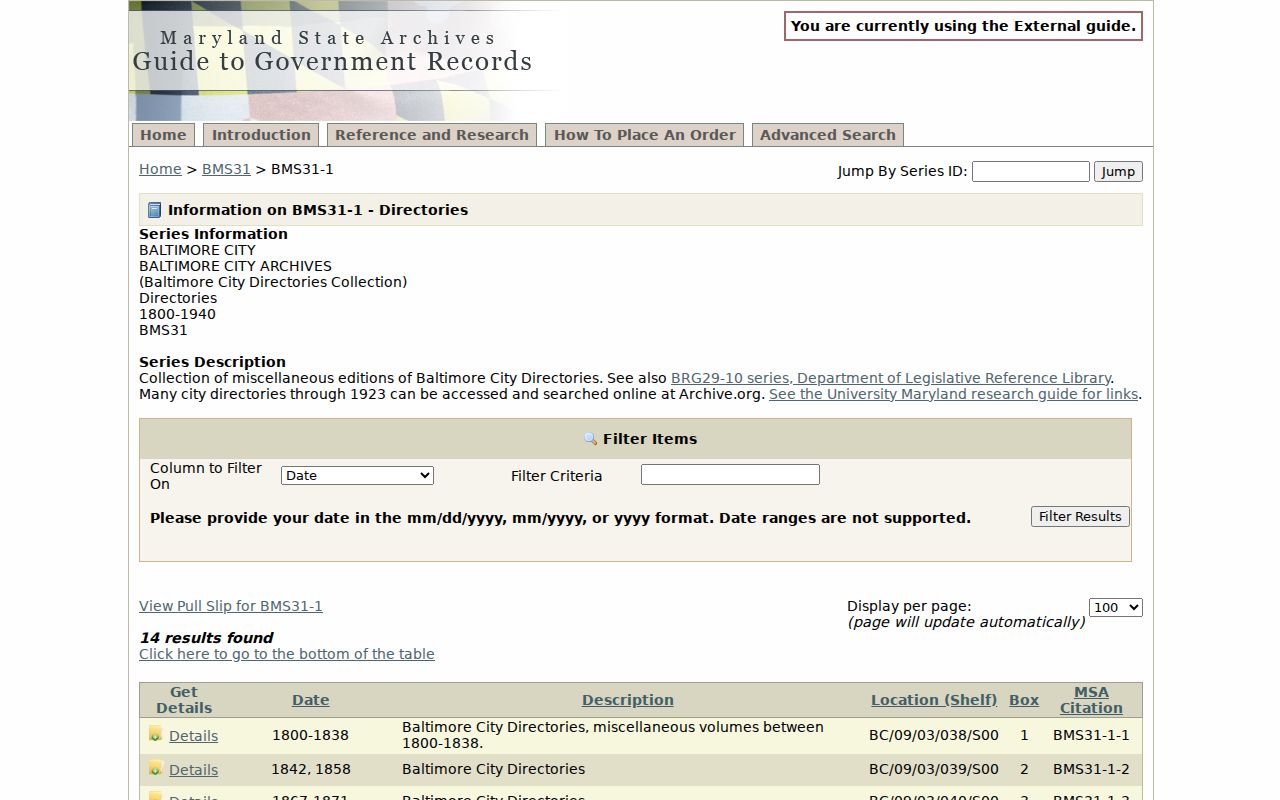
Pull the series and item details from the page before calling a city-directory search finished. Then request or cite the exact volume you need.
Woodlawn Directory Names Before 1851
Jurisdiction matters more than most people expect. Baltimore City split from Baltimore County in 1851. An older record may still rest with the city even though the family or land story now belongs to county history. Woodlawn came later as an unincorporated census-designated place. A nineteenth-century entry might name a road, parish, post office, tract, or neighboring community instead. Search the wording the source itself uses rather than swapping in Woodlawn.
That split is why a city directory works best alongside county records. Treat a directory hit as a dated location lead for a property question. Then follow it with the matching deed, plat, or tax-era source. For households, set the entry beside a census page, obituary, cemetery inscription, probate file, or newspaper notice. The SC 2898 collection description lists microform holdings available at the circulation desk. That makes it a solid fallback when an online search comes up empty.
| Before 1835 | Handwritten and older county records can be fragmentary after the courthouse fire; use finding aids and spelling variants. |
|---|---|
| 1851 split | Baltimore City and Baltimore County became separate custody paths. Preserve the date and jurisdiction on every citation. |
| Late nineteenth century | Directories, newspapers, census material, churches, and cemeteries can bridge an old community label to later records. |
| Modern Woodlawn | County and state custodians, not a city clerk, hold the main historical routes. |
Note: A missing entry often reflects the collection's coverage or jurisdiction rather than a household that went unrecorded in Woodlawn.
Reading a Woodlawn City Directory Entry
Copy a Woodlawn city directory entry exactly as it was printed. Keep the directory title, year, and page. Note the full name, initials, and exact street wording. Record any occupation or employer, plus any notation about a move. No sample Woodlawn household belongs here, since a working example cannot be verified. A printed address shows only that the publisher linked a person to that place. It was linked at that time. It does not prove ownership, list every household member, or establish a permanent residence.
| Name and initials | Preserve punctuation, initials, married names, and variant spellings for the next search. |
|---|---|
| Street or address | Copy the exact printed form. A later address conversion should be separately documented. |
| Occupation or employer | A useful identity clue, but not proof of a current relationship to that place. |
| Year and page | The time stamp and citation needed to return to the same printed listing. |
| Move notation | Any notation such as a move or removal can suggest a next city, county, or record set to search. |
- Criss-cross directory
- A directory arranged by street or address rather than by surname. It can help test a printed address, but an inspected Baltimore County or Woodlawn title-and-year run was not located.
- Householder index
- An arrangement that points to the head of a listed household. It is not necessarily a complete household roster.
- Abbreviation key
- The volume's explanation of shortened terms and symbols. Photograph or transcribe it before interpreting a mark.
Woodlawn Branch Directory Databases
Woodlawn Branch of Baltimore County Public Library sits temporarily at 6660 Security Boulevard, Suite 13, Woodlawn, Maryland 21207, during a renovation and expansion. Published services include public computers, Wi-Fi, printing, fax, study rooms, programs, and librarian help. Hours run Monday through Thursday, 9 a.m. to 8 p.m. Friday and Saturday hours are 9 a.m. to 5 p.m. The branch closes on Sunday. Confirm the temporary location and hours before any research visit.
The branch page publishes no shelf-level directory or obituary inventory for Woodlawn. Ask a librarian instead for the system route to Baltimore County directories, yearbooks, newspaper microfilm, obituaries, and local-history items. A specific fallback works best. Bring the full name, the date range, the community or road, and the type of item sought. That detail lets staff check a catalog, a reference service, or an interlibrary loan request without assuming a local directory already sits on the shelf.
The Woodlawn Branch location page supplies the temporary-location and service details.
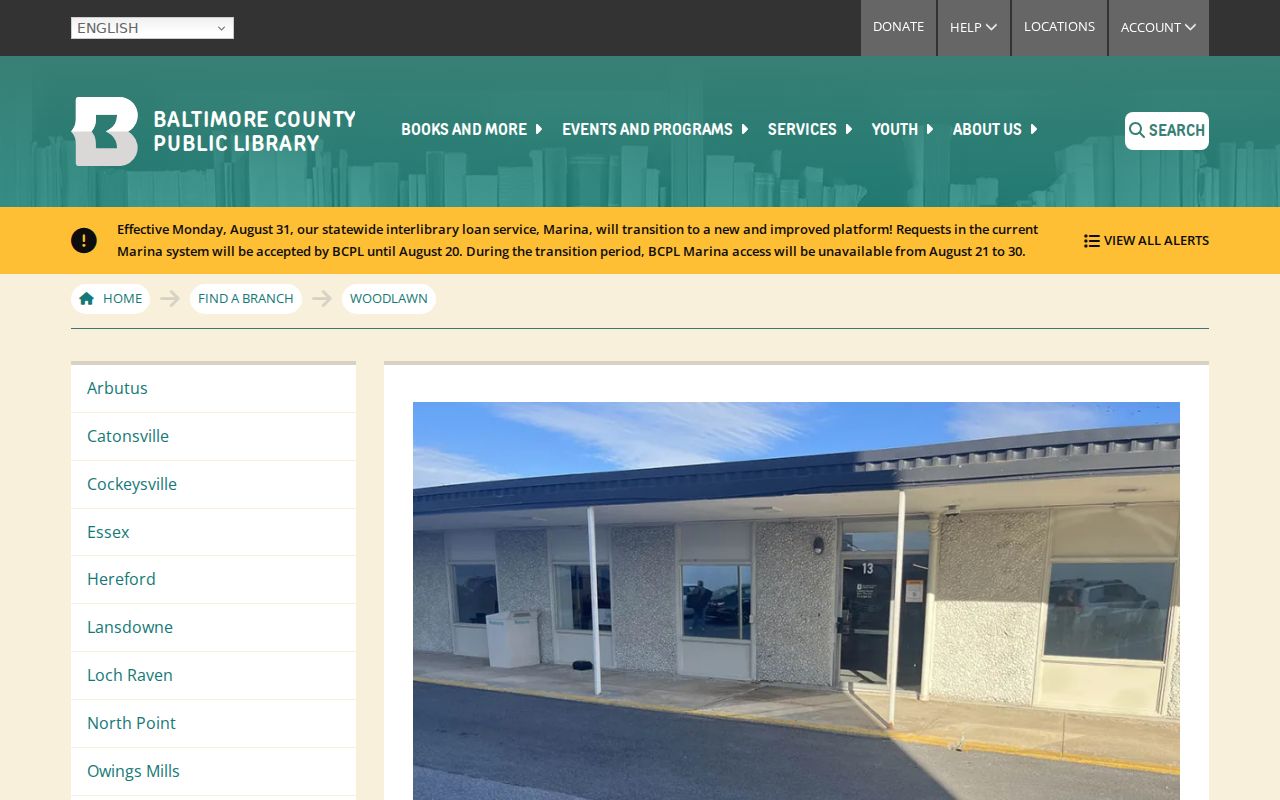
Woodlawn Branch is a practical starting point for a city directory question. It shines when the next record needs a librarian referral or a local database.
Woodlawn Historical Society Directory Files
The Historical Society of Baltimore County Library gives a county-centered option. It helps when a printed directory runs thin. Its holdings span more than 4,300 books. Photographs top 10,500. Vertical files pass 2,600, and surname files pass 4,400. Maps, cemetery inscriptions, clippings, ledgers, manuscripts, limited directories, and yearbooks round out the shelves. A surname in a directory can open a church, cemetery, or road file. It may also open a family file the print volume never indexed.
Nothing circulates. Published hours are Friday and Saturday from 10 a.m. to 2 p.m. Nonmembers pay an entrance fee, and staff or volunteer research requests carry hourly charges. Include a name, approximate date, and street or community. Add a goal such as a directory page, cemetery inscription, map, or obituary. The online catalog does not index every Woodlawn address. So ask for the call number, box, volume, reel, or copying rule with any request.
The Historical Society library page describes the holdings, fees, and access conditions.
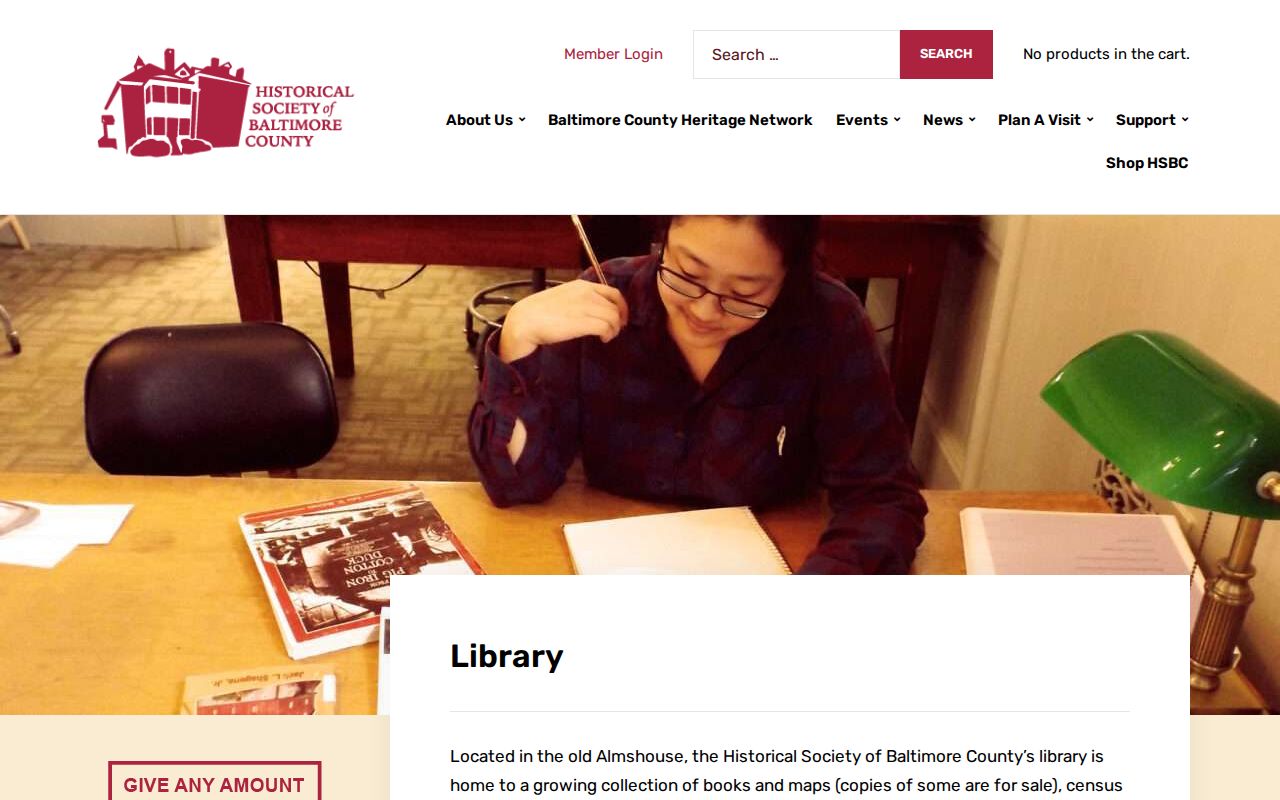
These files add county context to a Woodlawn city directory lead. An unverified surname hit still needs support before it becomes a residence claim.
Woodlawn City Directory Database Access
BCPL's research databases open another route when the printed title is unknown. Ancestry Library Edition works as an in-branch service. It covers census, passenger and immigration, vital, military, directory, and photograph records. BCPL also offers Baltimore Sun access with a current 30-day window. It includes a 20-year article backfile, plus other news and research tools. A database result may carry a county, post office, or household label instead of Woodlawn.
Search a surname several ways. Try full spelling, initials, a married or former name, and an employer address. Add the road name without its current suffix. Save the displayed title, year, page, and image or database citation. Then test the result somewhere independent. A scanned index can hold one error. An original page image and a later transcription can each hold a different error. The BCPL database listing shows the in-branch genealogy routes. It also shows the newspaper routes available to a Woodlawn city directory search.
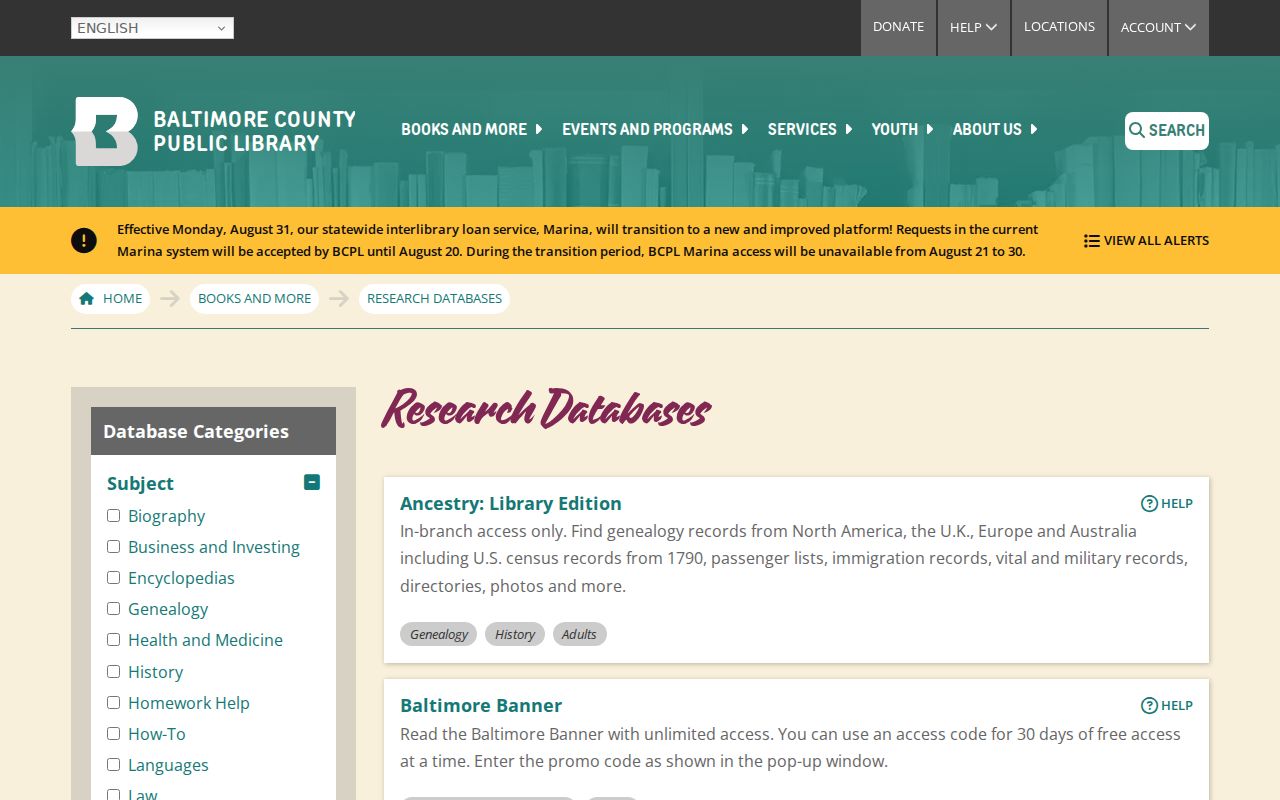
Use the database screen as an access route, then retain the original directory or newspaper citation for the research file.
Tracing Woodlawn City Directories by Year
A year-by-year trail beats a single attractive listing. Begin with a well-anchored name. The anchor should be a census, deed, obituary, or probate reference carrying a full name, approximate date, and place connection. Search the first expected directory year. Then work one edition at a time in both directions. Record each first appearance, last appearance, changed spelling, changed occupation, and changed address. A disappearance can mean a move, death, omission, or a collection gap, so test it against a second source before treating it as fact.
- Write down the known name, initials, approximate year, street wording, and the source that supplied them.
- Locate the earliest plausible directory entry and capture its title, year, page, and every printed field.
- Check the preceding and following editions for a first or last appearance, alternate spelling, or new address.
- Pair the dated listings with released federal census years, an obituary, cemetery file, probate estate, or deed reference.
- Keep a conflict column for facts that do not match, rather than silently merging same-name people.
The Enoch Pratt Maryland Department holds city directories and reverse telephone directories for many counties. Telephone directories go back to the early 1920s. Its page publishes no Woodlawn-specific reverse-directory inventory. Request a title and year range rather than assuming a criss-cross section exists for a particular address.
Woodlawn Listings and Ownership Compared
A directory listing and a property record answer different questions. A listing shows a publisher linked a name to an address or occupation at one point in time. A deed or assessment names an owner of record. Owner and premises can differ, though. An owner mailing address may not match the property. Keep those labels separate. That habit prevents two common errors: calling an owner a resident because a land record lists them, or calling a listed person an owner because a directory prints them.
| Source type | Strongest use | Limit to record |
|---|---|---|
| Directory page | Time-stamped listing, street wording, occupation, or publisher notation | Not proof of ownership or a complete household |
| Recorded deed | Named parties and recorded land transfer | Does not establish who occupied the premises |
| Census or obituary | Household or contemporaneous family context | Coverage, wording, and reporting limits still apply |
Need a current, address-keyed record trail? Use the Woodlawn Streets page after the historical directory research has identified a place and time.
Woodlawn City Directory Gaps
Woodlawn has no complete directory run in one place. No full local reverse-directory title list exists. Nor does an inspected Woodlawn street-entry page. Log the repository, collection or database, title and date range. Note the exact spelling, filters, and search date. A negative entry earns its keep. It explains why the next step moved to a newspaper, cemetery, county archive, or courthouse collection.
Chronicling America offers free page images. They come from a Baltimore County newspaper issue running 1909 to 1912. Search the images yourself. Optical character recognition misses things. Surnames and Woodlawn references slip past it. So hunt by eye for names, roads, legal notices, schools, churches, sales, and estate matters. Later material may need BCPL newspaper access, local microfilm, or Historical Society clippings. Cite the newspaper title, date, and page. Then seek a probate, vital, court, or land record to verify the connection.
Note: Preserve a directory gap as a dated search result. Do not treat it as proof that a person or household never existed.