
Find Woodlawn Residents by Record
Woodlawn is an unincorporated census-designated place in Baltimore County. So there is no city directory office to visit first. The entry point depends on the clue in hand. An exact address works well in the Maryland Department of Assessments and Taxation property search. It also works in the Baltimore County GIS viewer. A full name points toward Maryland Land Records, Maryland Judiciary Case Search, and the Register of Wills estate search. Or it points toward a historical repository. The best result stays narrow and dated. It shows one person, one record, the address wording shown, and the date shown.
Each public record answers a different question. A parcel card names an owner of record, not every occupant of a household. A deed documents a transaction. A directory or census entry shows a dated presence. Court and election systems carry their own coverage limits and privacy rules. Treat owner, occupant, party, and representative as separate labels until independent records tie them together.
- For an address, search Baltimore County in SDAT by street, account, map reference, or sale route.
- Use the parcel account, legal description, or book and page reference to inspect the GIS and land-record trail.
- For an identified person, compare an official name-index result with a second dated source such as probate, a directory, or an obituary.
- Use the Woodlawn Branch, Historical Society of Baltimore County, or Maryland State Archives for historical material outside online indexes.
- For an unavailable county record, make a focused Maryland Public Information Act request to the custodian with the address, date range, and record type.
Note: A result you cannot reproduce with a recorded date, a search field, and a custodian should stay a lead rather than a conclusion.
Woodlawn Resident Records Offices
Woodlawn has no city clerk. No municipal court or city assessor exists either. The custodians that matter sit in Baltimore County offices, Maryland agencies, and state repositories. The Circuit Court clerk holds land instruments and open court files. SDAT keeps the assessment record. The State Board of Elections provides individual voter verification. None of these offices builds one combined roster, yet each keeps a distinct record that a careful residents directory search must compare.
Baltimore County Land Records
County Courts Building
401 Bosley Ave., Towson, MD 21204
Land Records Indexing: 410-887-3088
Maryland SDAT Property Search
State assessment custodian
Baltimore County code 04
Use the published online route
Maryland Voter Services
State Board of Elections route
Individual registration verification
Use the state lookup or county-board route
Counter visits still matter. The Baltimore County Circuit Court clerk opens weekdays from 8:30 a.m. to 4:30 p.m. and offers copy routes for accessible land and court material. Maryland State Archives holds older county series and finding aids. A finding aid identifies a series, volume, reel, or call number. It is not proof of that.
Woodlawn’s County Records Route
One Woodlawn parcel can carry several mailing labels. Woodlawn, Gwynn Oak, Baltimore, and Windsor Mill all appear in postal fields for the area. The parcel still sits in unincorporated Baltimore County. Keep the county, parcel, postal city, ZIP, and premises address as separate facts. Towson is the county seat. Its counters are the practical access point for Circuit Court land, license, and court records. Maryland agencies hold statewide assessment, election, and vital-record functions. That split explains why a missing city-office result never ends a Woodlawn search. The Baltimore County clerk’s office information page shows the Towson counter. It handles land-record and copy services.
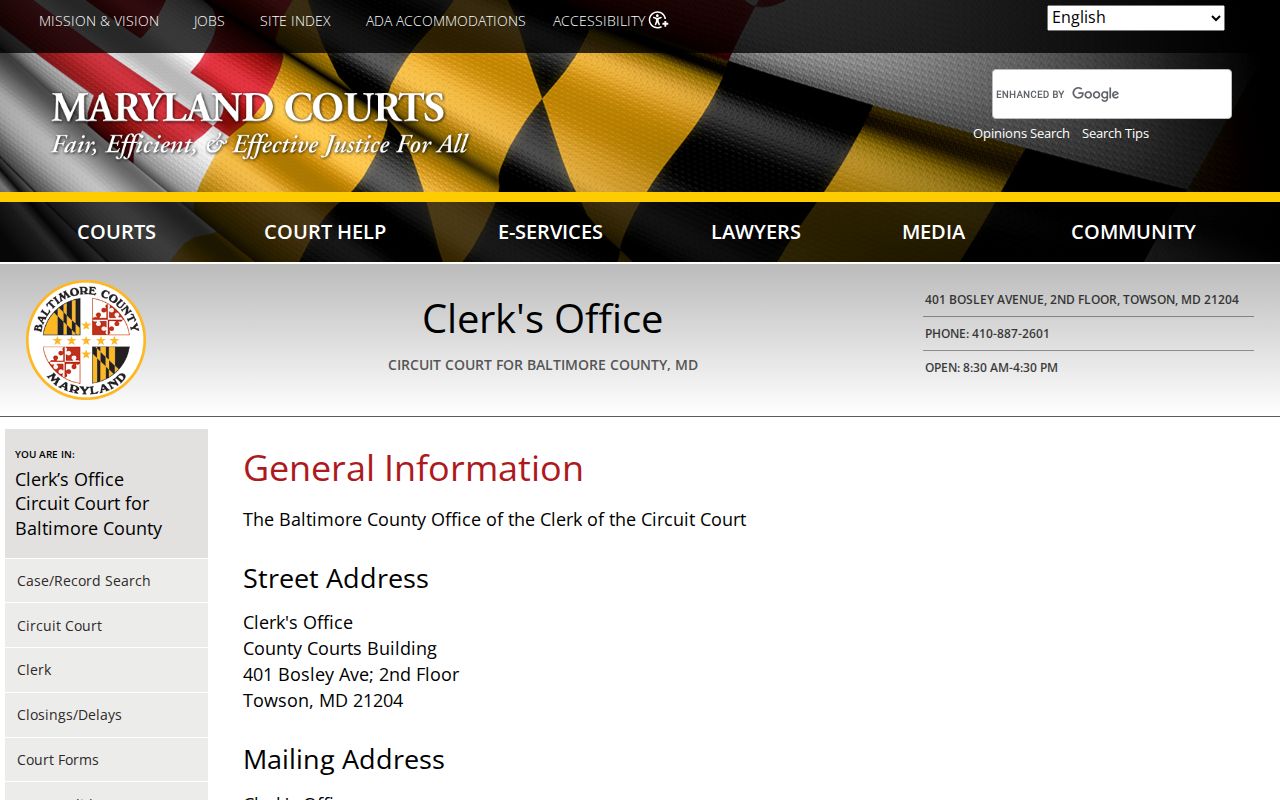
The clerk is the fallback. It helps when an online summary lacks a file, an image, or a certified copy. Older record geography adds another layer. The county predates the modern Woodlawn CDP. A courthouse fire in 1835 may have left gaps. Baltimore City separated from the county in 1851. A historic land, probate, or court question may therefore need a county series, a Baltimore City repository, and a Maryland State Archives finding aid rather than a modern Woodlawn keyword. Note: A postal-city label is useful evidence, but it cannot substitute for a county and parcel check.
Woodlawn Property Search Boundaries
The SDAT Real Property Data Search is the strongest current address-to-owner starting point for Woodlawn. Choose Baltimore County first. Then search by address or street, property account identifier, map reference, or sales mode. Owner-name search is another story. SDAT offers no public web search by owner name, town, neighborhood, subdivision, or ZIP. That limit matters. It forces you to pin down an address first. A name trail can then be tested elsewhere.
| SDAT field or control | Use in a Woodlawn search |
|---|---|
| County | Choose Baltimore County, code 04. |
| Street number and name | Address route; omit directional terms and suffixes as SDAT instructs. |
| Account identifier | Use when known, including for a deleted account. |
| Map, grid, and parcel | Connect the assessment entry to GIS and a legal description. |
| Sales mode | Locate transfer information and a potential book or page reference. |
A parcel card can show owner name, mailing and premises addresses, account identifiers, map and parcel references, sale data, and a deed book or folio reference. Mailing and premises addresses often differ. The public data are informational, not a legal report. The displayed parcel map is not a survey.
Woodlawn Deed Index Trail
Once SDAT gives a parcel lead, Maryland Land Records can tie it to a recorded instrument. The current home-search system requires a free account. Select Baltimore County there. Search by grantor or grantee name, book and page, party type, instrument type, date range, or matching mode. Grantor means seller. Grantee means buyer. The index leads to a recorded document, not to a complete ownership or resident list. The MDLandRec search screen shows the county, name, book, page, and index navigation available for a Woodlawn deed trail.
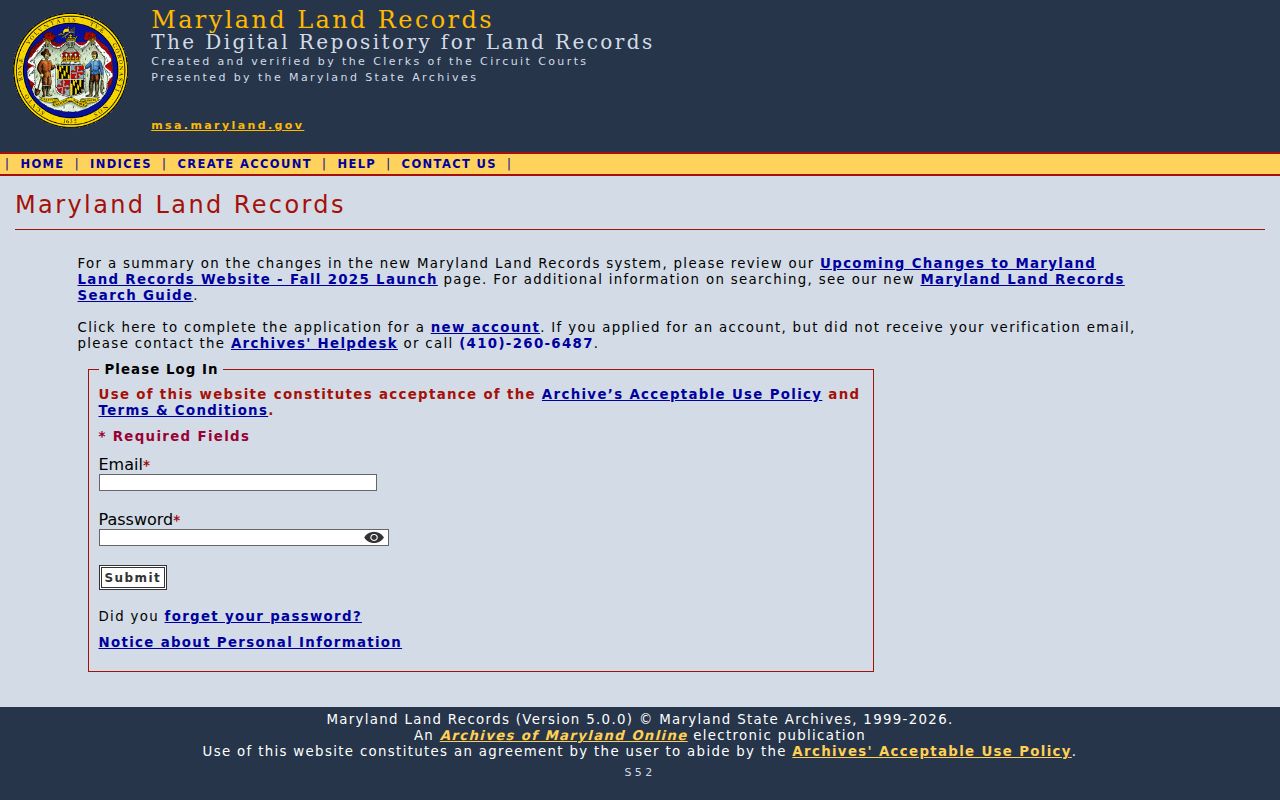
An index lead can appear before the image does. Read the deed image once it becomes available, because the instrument may hold the prior-deed reference needed for a backward ownership chain.
Current Woodlawn Resident Directories
No single Woodlawn directory lists every household today. What exists instead is a patchwork of limited sources, each tied to a specific record purpose. SDAT and recorded deeds describe ownership. Court and estate indexes identify parties to a matter, while voter tools verify one specific registration match. Civic and library material may add historical context. Treat the source label as part of the result, because calling every recorded name a current Woodlawn resident creates false matches in any residents directory search.
| Woodlawn source | What the record identifies | Custodian | Access route |
|---|---|---|---|
| SDAT property card | Owner of record, premises, mailing address, parcel, and transfer data | Maryland SDAT | Free address, account, map, or sales search |
| Land-record index | Grantor, grantee, instrument, book, page, and recording trail | Circuit Court clerk / MSA | MDLandRec account and clerk counter |
| Voter tools | Individual registration-status or polling-place result | Maryland State Board of Elections | Required identity fields or controlled file request |
| Estate search | Estate party, number, filing, and status leads | Baltimore County Register of Wills | Statewide estate search and Towson records division |
| Historical repositories | Dated directory, newspaper, cemetery, census, or surname-file lead | BCPL, Historical Society, MSA | Library, archive, microfilm, or request route |
Some questions need more than one record type. That is when the Woodlawn resident lookup route earns its keep, verifying a named person against several sources. A historical address trail works differently. It belongs with a date, a source citation, and a note on whether the record shows ownership, presence, or only a legal or administrative role.
Woodlawn Voter Lookup Rules
Maryland's voter lookup verifies one registration, not a street. The Maryland Voter Lookup is an individual verification tool rather than a street-wide household directory. The public form asks for first name, last name, date of birth, ZIP, and street number, with a middle initial optional. The state updates the data daily. New changes may take three weeks to appear. A failed result has many innocent explanations. It may reflect an earlier spelling, a former ZIP, a former name, a field mismatch, or confidentiality protection.
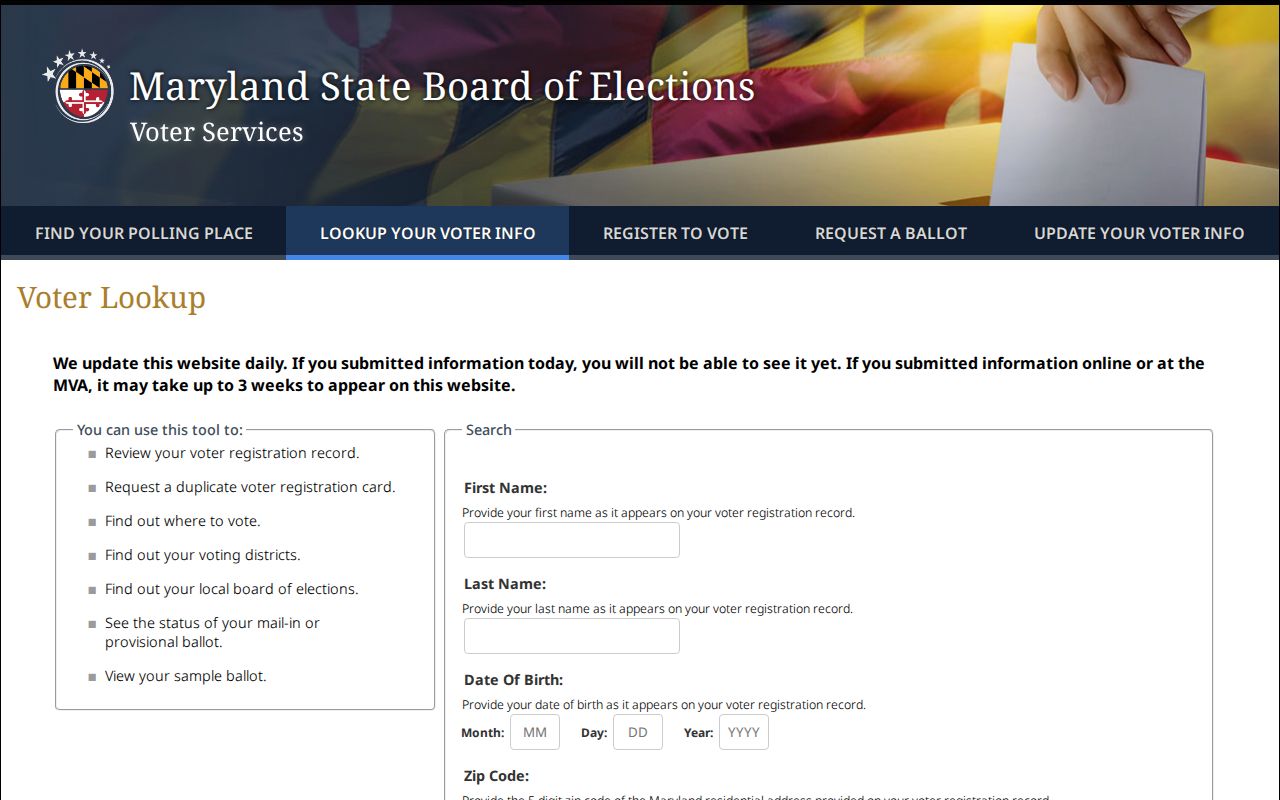
Election Law §§3-505 and 3-506 allow inspection or list access. That access carries conditions. Confidential fields stay protected, requesters swear an oath, fees apply, and use is restricted to electoral purposes. Protected voters and Safe at Home participants require special care.
Note: A voter result is time-sensitive election information. It is not proof that anyone currently occupies a particular Woodlawn premises.
Woodlawn Court and Estate Names
Maryland Judiciary Case Search is the main entry point. It locates public Baltimore County case summaries. Searches run by party name, court, case number, category, or filing date, and the published coverage starts are uneven across courts. Circuit civil records begin in 1995, Circuit criminal in 1984, District criminal in late 1991, and District civil in 1989. A public summary is not the whole court file. Some material sits beyond the summary. Paper or electronic files may require a clerk request or a courthouse terminal. Estate records offer another name trail through the Register of Wills' Maryland estate search, which covers online estate data from 1998 forward, showing estate numbers, parties, filing dates, and statuses. Check it before a Towson Records Division request.
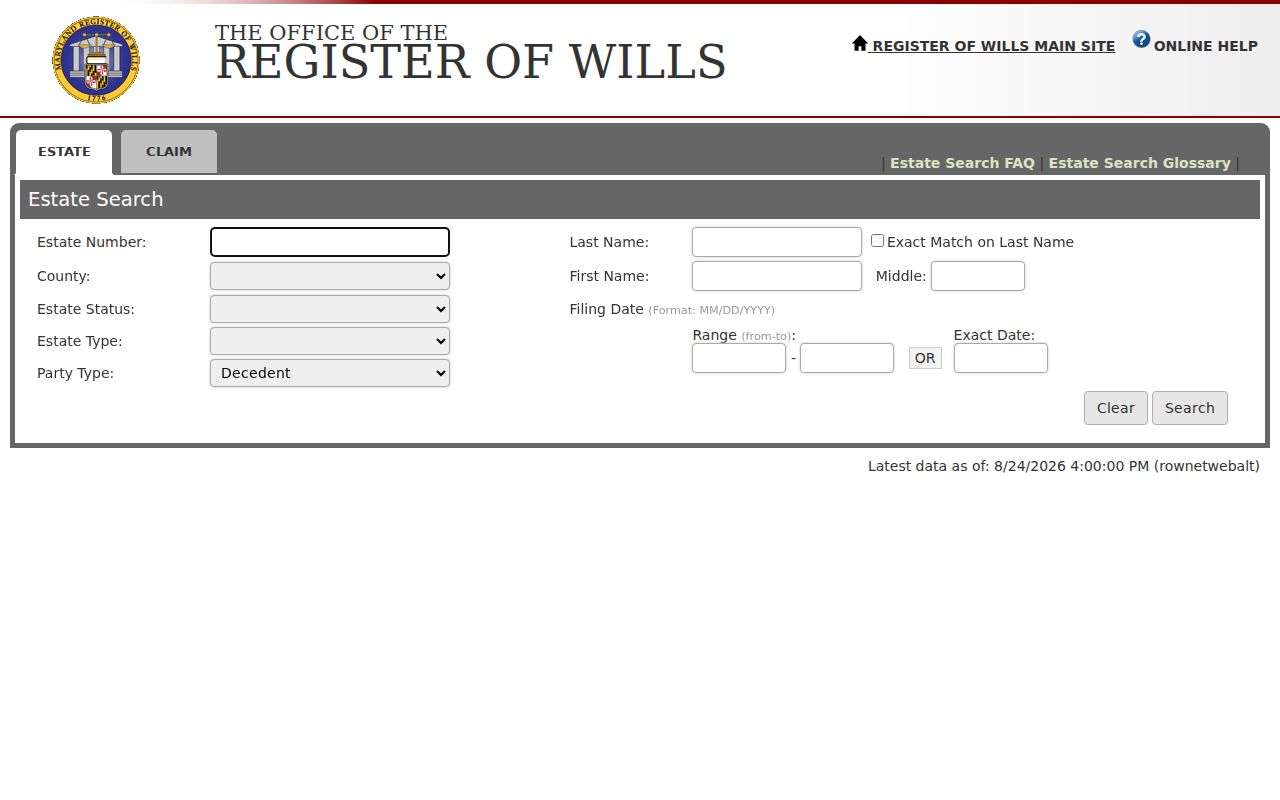
An estate result opens doors. It can point to a deed transfer, an obituary, or a probate file, but it never establishes a current family relationship or household in Woodlawn.
Woodlawn Vital Record Custodians
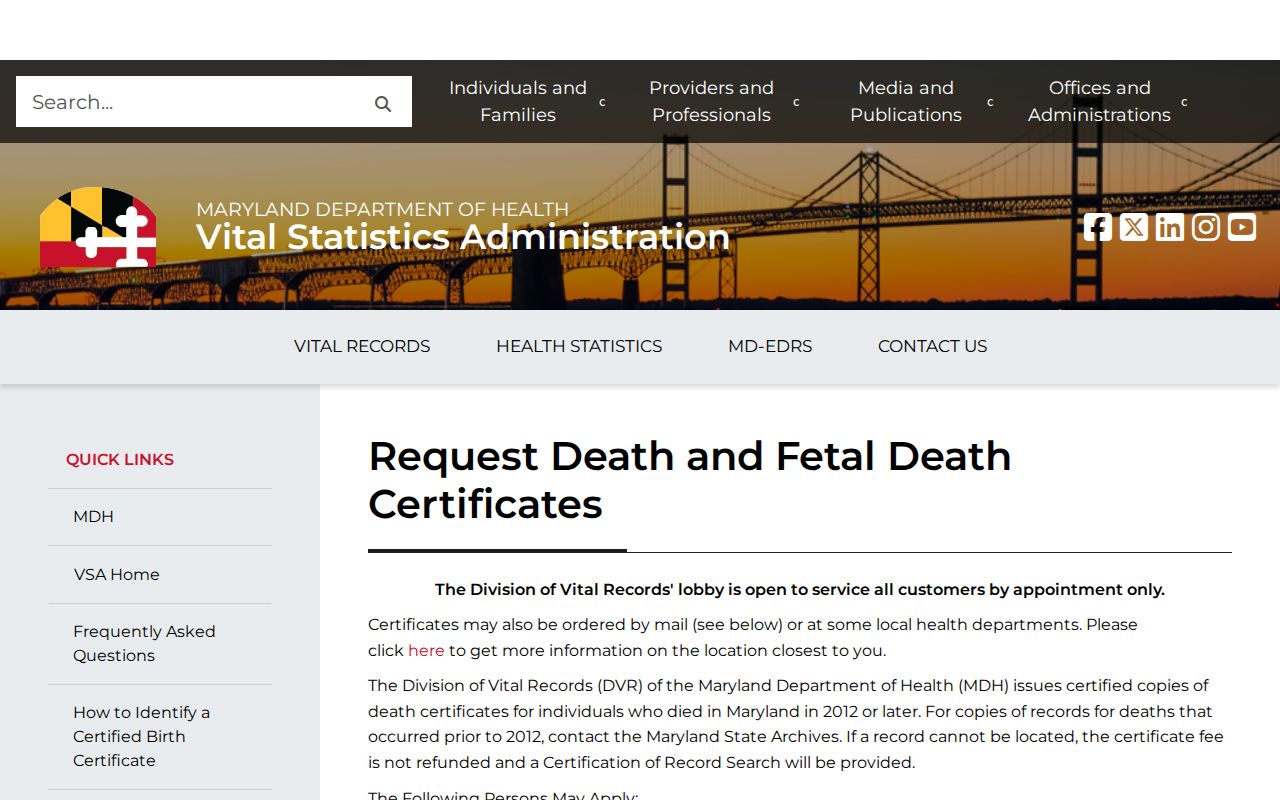
Access to vital records hinges on the event, its date, and eligibility. No single office holds everything. The Maryland Division of Vital Records handles current statewide certificates. The Circuit Court clerk, Register of Wills, and Maryland State Archives each keep separate roles. Marriage, divorce, estate, and historical collections sit with different custodians. A certified record is not an open name-search product. Maryland law and COMAR rules require direct or tangible interest for many restricted certificates. The Maryland death-certificate request route shows the official online, mail, and local-health-department channels. Eligible requests go through those channels.
Archives rules split the old from the new. Births more than 100 years old and deaths more than 10 years old sit in Archives custody under different terms than current certification rules. Use the index or extract within the stated terms.
Woodlawn Address Clues Need Context
Address-linked records are strong clues, but their meanings differ. A deed identifies the parties to a recorded transaction. SDAT shows an owner of record plus separate mailing and premises fields. A permit can name an applicant, contractor, owner, or agent, and a business filing can show a resident agent or principal office. Use the relationship printed by the source. Then test it against a second dated record before describing anyone as a Woodlawn resident. Business records have their own lookup. The Maryland Business Express entity search offers legal-name, Department ID, and EIN search options for a business-record lead.
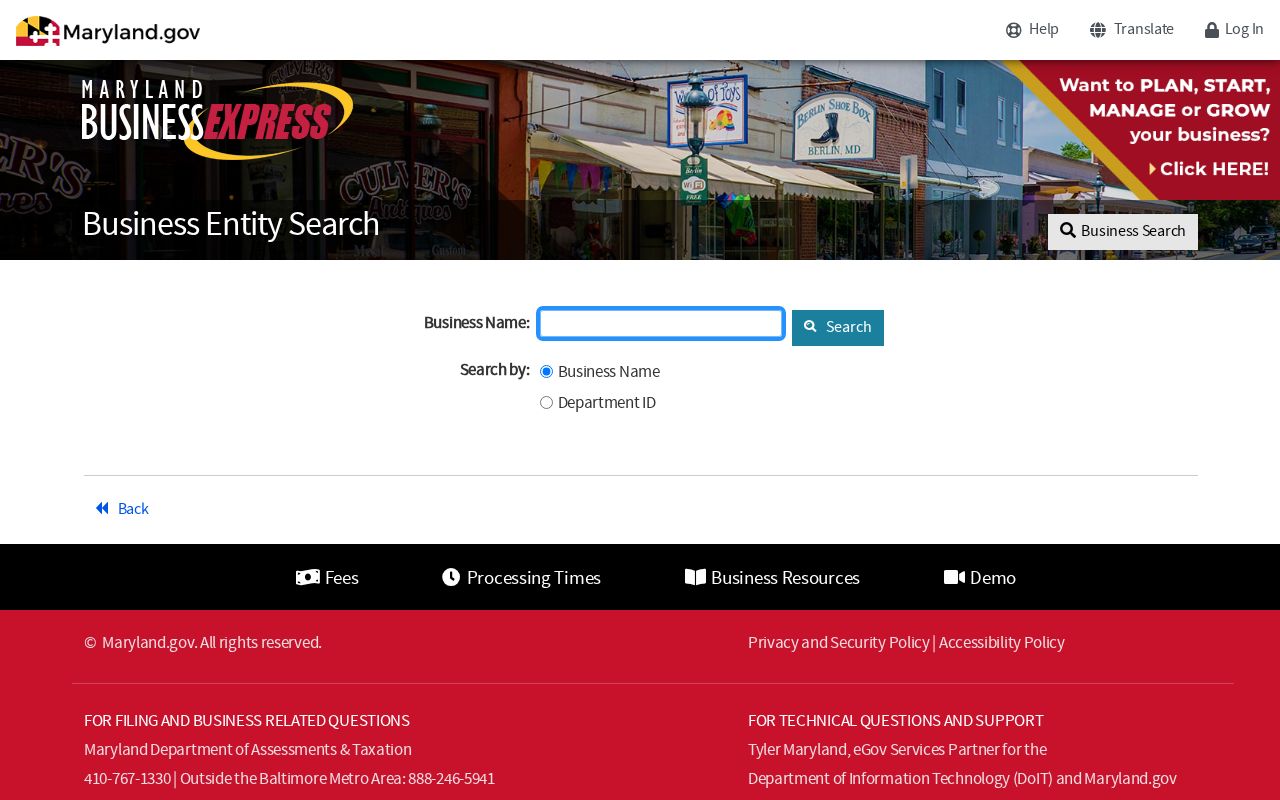
Entity status, resident-agent information, and filing documents can explain why a name appears in a record. They do not show who lives at an address.
| Official source | Reliable description | What still needs confirmation |
|---|---|---|
| SDAT or deed | Owner or recorded party tied to a parcel or instrument | Actual residence and household membership |
| Directory, census, or obituary | Dated published or historical presence lead | Ownership and present address |
| Business filing or permit | Organization or project connection | Personal residence or completed work |
Historical Woodlawn Resident Directories
Historical Woodlawn research is Baltimore County research with a changing place label. An older source may use a road, post office, parish, nearby community, or Baltimore County rather than the later CDP name. The Woodlawn Branch, Historical Society of Baltimore County, Enoch Pratt Library, and Maryland State Archives provide different routes to printed directories, reverse telephone directories, census material, newspapers, maps, cemetery files, and finding aids. Record the exact source wording instead of silently converting it to a modern label.
The detailed collection and reading workflow belongs in the Woodlawn city directory guide. A directory entry can supply a year, address, occupation, or household notation, but it is a dated listing rather than proof of ownership or a complete household.
Note: No official Woodlawn-only directory run was verified, so collection descriptions should be treated as access routes rather than name-index guarantees.
Limits on Woodlawn Resident Searches
A Woodlawn residents directory built from public systems cannot promise a full household roster. No general right exists to a current phone number or utility account. School records, DMV records, and protected addresses are off the table too. Confidential categories carry their own rules. Juvenile, sealed, expunged, and medical materials sit outside ordinary resident lookup routes. Maryland's Safe at Home program gives eligible survivors a substitute address with mail forwarding. Protected voter records may never surface through standard property rolls or city directory searches. Silence in a residents directory is not proof of absence. Log any missing result with its fields and date. Do not stretch it into a broad claim about a person. The Maryland Sex Offender Registry shows the difference. It is one official database with a narrow stated purpose and its own anti-harassment warning.
Every Woodlawn database answers one kind of question. A residents directory entry, a voter roll line, or a parcel record proves only what that system tracks. No single record establishes where someone lives now, who they are, or anything about a full history. Treat each lookup as one tile in a larger mosaic.
A search that comes back empty is rarely a dead end. It usually means the question belongs to a different custodian. An address with no hits may need the SDAT parcel number. An older street spelling may help too. A deed question may belong at the clerk's counter. It may also sit in a Maryland State Archives series, or on a plat. Historical households often surface in a library directory, a newspaper, a cemetery file, or a census route. A modern residents directory may simply miss them. A person-name search may point toward a court or estate index, searched within a date range.
Log each empty result carefully. Record the portal, the jurisdiction, the exact fields tried, and the date. Note the coverage note and the next logical custodian. That trail keeps a stalled lookup moving toward the office that actually holds the answer.
- Record index
- A searchable pointer to a record, often without every underlying document image.
- Parcel
- A mapped unit of land identified by assessment or legal-description fields.
- Criss-cross directory
- An address-oriented directory format that can help locate historical listings by street.
- Resident evidence
- A dated source that supports presence, kept separate from ownership or party status.
Note: For a hard search, keep the portal name, exact fields, result date, coverage statement, and next custodian rather than reading silence as proof.
An empty result is a signal, not a verdict. Some other office in Woodlawn County likely holds the record you need.