
Woodlawn Previous Residents by Era
Match each address to the source built for its own era. Baltimore County land records reach far back. The online indexes and images start and stop at different points, though. A deed names who transferred a property. It does not, on its own, show everyone who lived there. To answer that, set the land trail beside another record. A dated directory, census entry, estate, obituary, or similar record can tie a person or household to the premises.
| Source | Years it covers | Where held | What it can show |
|---|---|---|---|
| Baltimore County land records | 1659 onward, with County Court records through 1851 and Circuit Court records after | MDLandRec, clerk, and State Archives series | Recorded transfers, parties, legal descriptions, and prior references |
| Federal census | 1790-1950 released schedules | National Archives routes and library databases | Household and geography as enumerated for the census year |
| MSA Baltimore City Directories | 1800-1940 collection range | Maryland State Archives | Dated directory leads, subject to city and county coverage limits |
| Estate Search | 1998-present online data | Maryland Register of Wills and Baltimore County office | Estate number, parties, status, and probate lead |
| Woodlawn library databases | Collection-dependent, no verified Woodlawn-only print run | Baltimore County Public Library | Research databases, newspapers, census, and reference routes |
For older material, two stops anchor the normal path. The Maryland State Archives series and the Circuit Court clerk in Towson both serve researchers. Expect breaks, though. The 1835 courthouse fire and the 1851 city-county separation make a clean, unbroken record trail unlikely for every Woodlawn address.
Start With a Woodlawn Parcel
Begin with the SDAT Real Property Data Search. Choose Baltimore County and enter the current address. Save everything it returns: the account identifier, map, grid, parcel, premises address, mailing address, owner of record, sale details, and legal description. SDAT allows address, street, account, map-reference, and sales searches. It does not allow public owner-name, town, neighborhood, subdivision, or ZIP searches. When a street form has changed, the parcel anchors the search better than the address does.
Next, lay the result over Baltimore County GIS. Parcel geometry, the road centerline, the building footprint, and map identifiers test whether the current address and the legal description describe the same land. Remember that GIS is a map aid only. It is not a deed or a survey. Keep the parcel record in its own column, separate from any table of household evidence.
Trace Woodlawn Past Owners Backward
The deed chain anchors prior residents research, yet it is truly a chain of ownership. Start from the current SDAT entry and pull up the recorded book and page. Or search the owner as a grantee in MDLandRec. Read the image and identify the seller. Then search that seller as grantee to find the earlier acquisition. Keep repeating until you reach the target era or a documented gap. Along the way, the deed may name the consideration, restrictions, and a legal description. It may also carry a "being the same" prior-deed reference. That reference often beats a modern street label for usefulness.
- Capture the current parcel and its legal identifiers from SDAT and GIS.
- Find the most recent transfer in MDLandRec using book/page or a party-name search.
- Read the image, not just the index result, and record the grantor, grantee, date, instrument, and prior reference.
- Search the prior owner as grantee, then test each backward link against the same legal description or plat.
- Use the clerk counter, State Archives series, or microfilm route when the online index or image does not cover the needed period.
- Grantor and grantee
- The grantor transfers an interest; the grantee receives it.
- Chain of title
- The sequence of recorded transfers associated with the same land.
- Legal description
- The lot, block, tract, or plat wording that identifies land when a street address is absent or changed.
Woodlawn Previous Residents Need Deed Images
MDLandRec requires an account for its current online system. Its search tools cover county, book and folio jump, party name, party type, exact or flexible name matching, instrument type, cross-reference, and date range. Sometimes the index appears before the image does. Images generally post one to two business days after a book is verified, so treat an index hit as a lead until the image itself is available and read. Note that tax assessments, tax liens or judgments, blueprints, and some equity or chattel records fall outside the land books.
The Maryland Land Records site supplies this Woodlawn deed-index image.
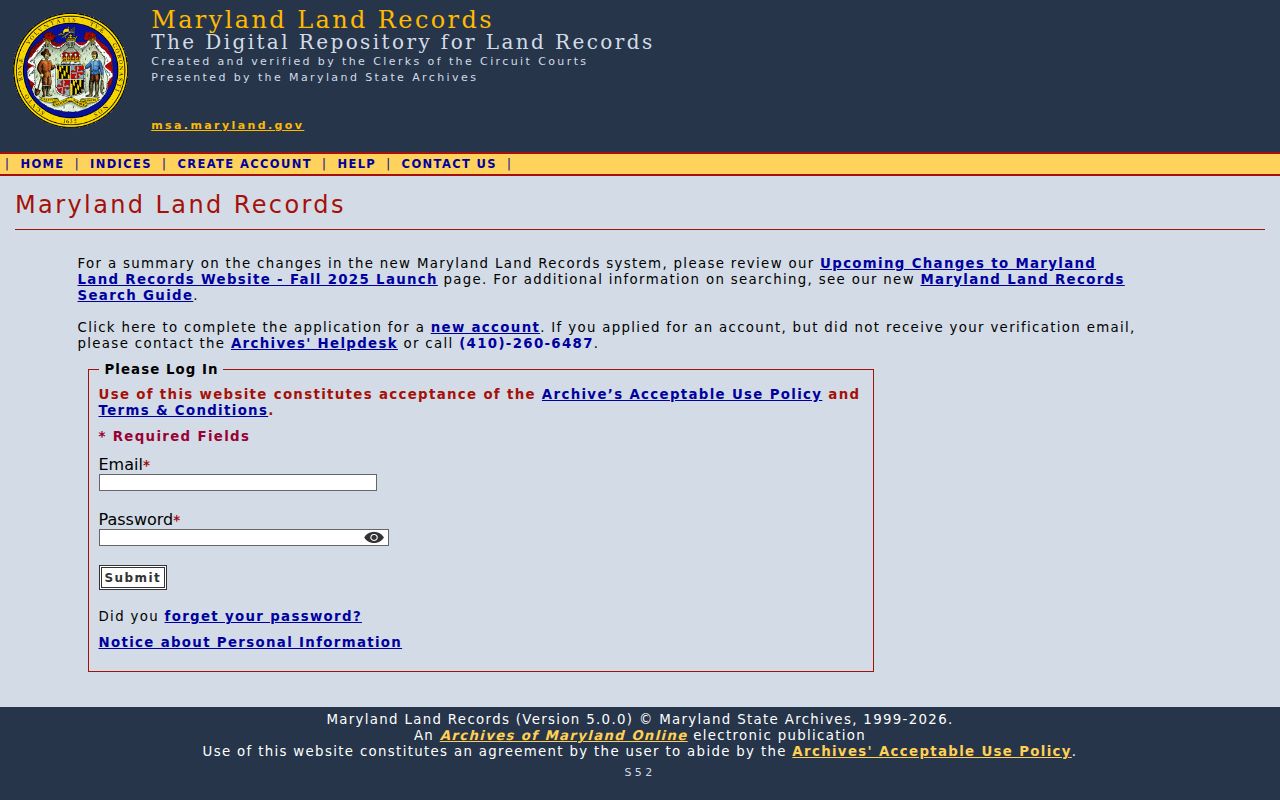
The gap between an index entry and its image matters, because the recorded pages may hold the prior-deed reference and legal description the next step depends on.
Past Woodlawn Households Need Proof
Recorded ownership and a prior household answer different questions. The 1950 census is the newest fully released federal decennial schedule, under the 72-year rule. Older schedules capture household composition and the geography recorded at the time. Directory and newspaper entries fill the gaps between census years, though each is a dated listing rather than a full household account. A same-name match can be settled with an obituary, cemetery file, probate record, or a later deed.
The Maryland State Archives Baltimore City Directories series holds material dated 1800 through 1940, and the special collection adds 1752 plus 1796-1860 and 1863-1901 items. These are Baltimore City holdings, not a promised Baltimore County or Woodlawn run. The exact city or county label on an entry matters. How the collection was assembled appears in the Woodlawn city directory resources.
The Maryland State Archives Baltimore City Directories series is the source for this Woodlawn collection image.
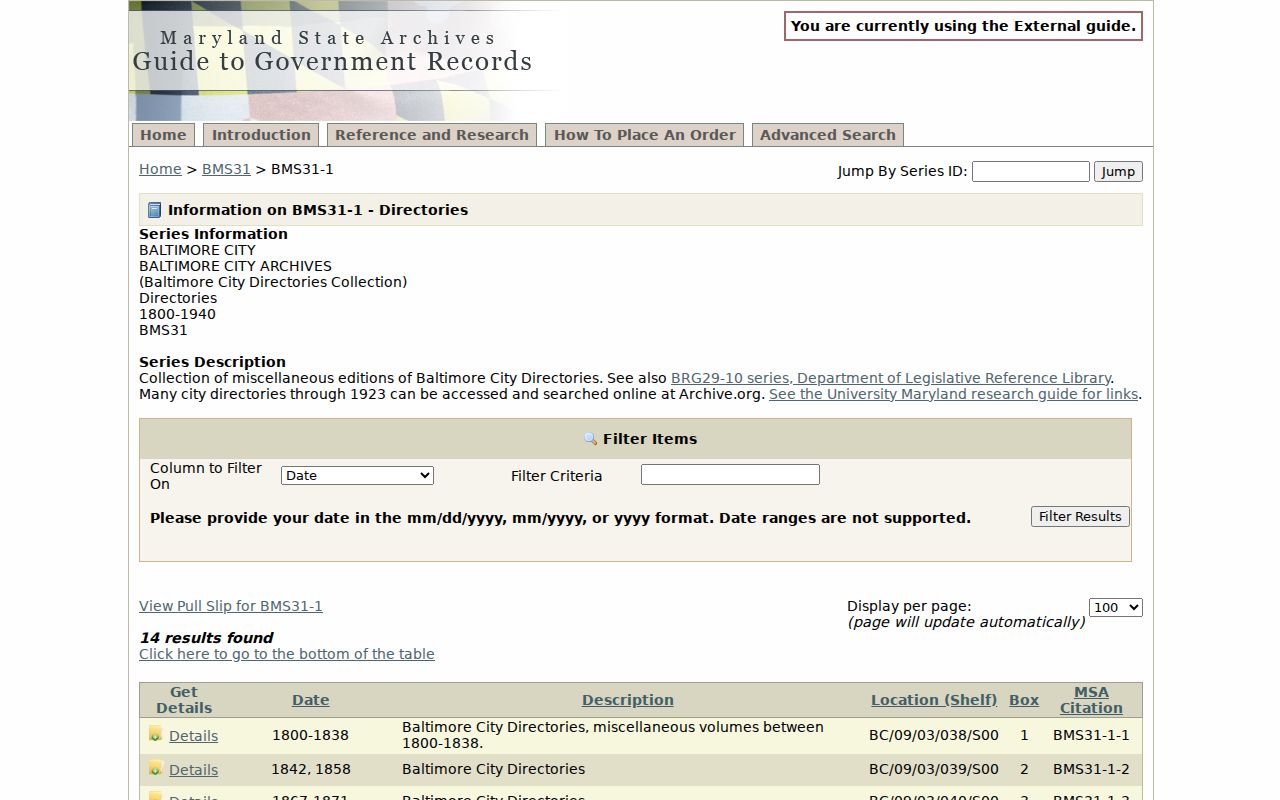
Note: Before tying any directory entry to an address history, record the title, year, page, printed address, and repository citation.
Woodlawn Estate Files Follow Transfers
Estate files often explain why a Woodlawn deed changes names. The Maryland Register of Wills Estate Search puts data from 1998 forward online. It refreshes daily. Searching works by estate number, name, county, status, type, filing date, or party type. The Baltimore County Register of Wills office in Towson, at 401 Bosley Avenue, keeps the probate route open. Pre-1998 paper or microfilm material also runs through the office or the Archives. Wills, inventories, accounts, personal representatives, and heirs all make useful leads. None of them replaces a death certificate.
The Maryland Estate Search supplies this Woodlawn estate-search image.
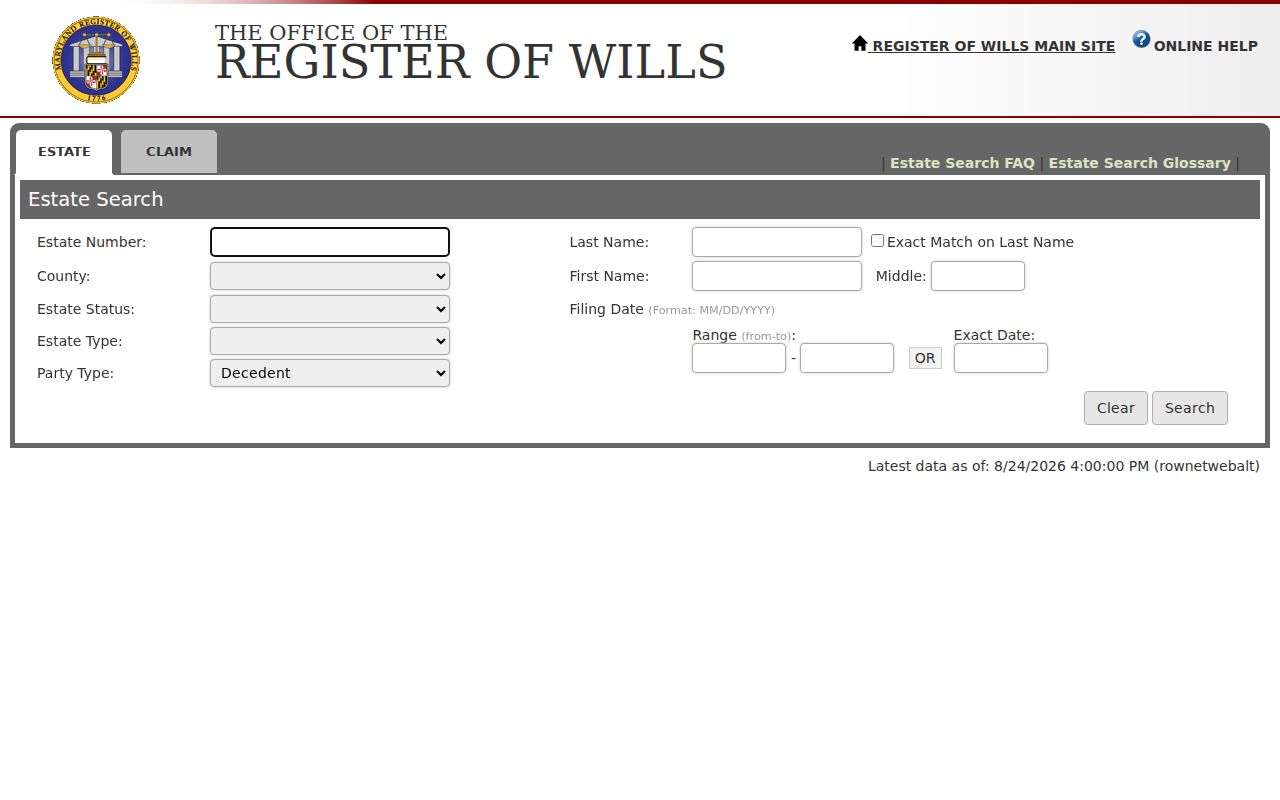
Carry an estate number or representative name forward. Use it to hunt the next deed, notice, obituary, or court-held probate item in chronological order.
Woodlawn Library Routes for Address History
The Woodlawn Branch of Baltimore County Public Library offers public computers and Wi-Fi. It also provides printing, reference help, and local-history referrals. Its temporary home during renovation is 6660 Security Boulevard, Suite 13, Woodlawn, Maryland 21207. The branch publishes no shelf-level inventory of Woodlawn city directory volumes. Think of it as a research route for address history. It is not proof of any single directory entry. Staff can still connect a records search to the right collections. Woodlawn Branch is the source for this library image.
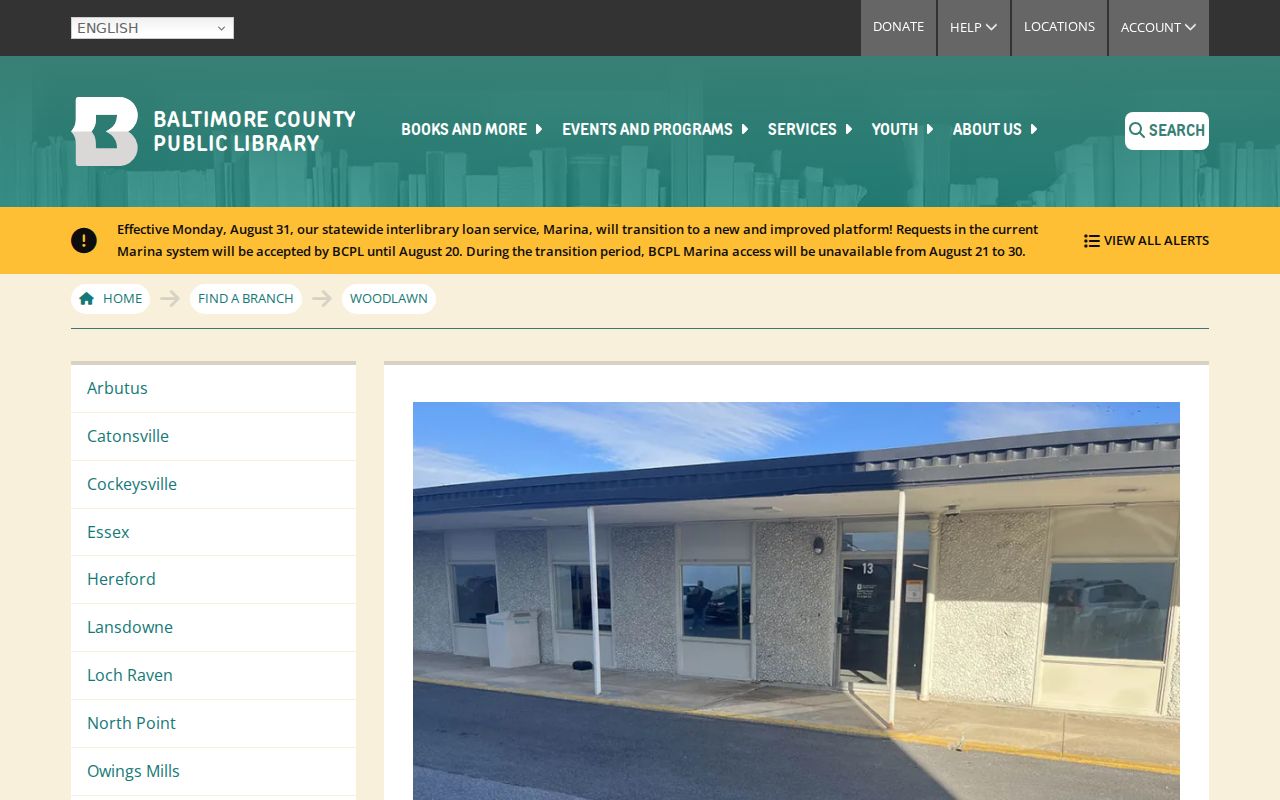
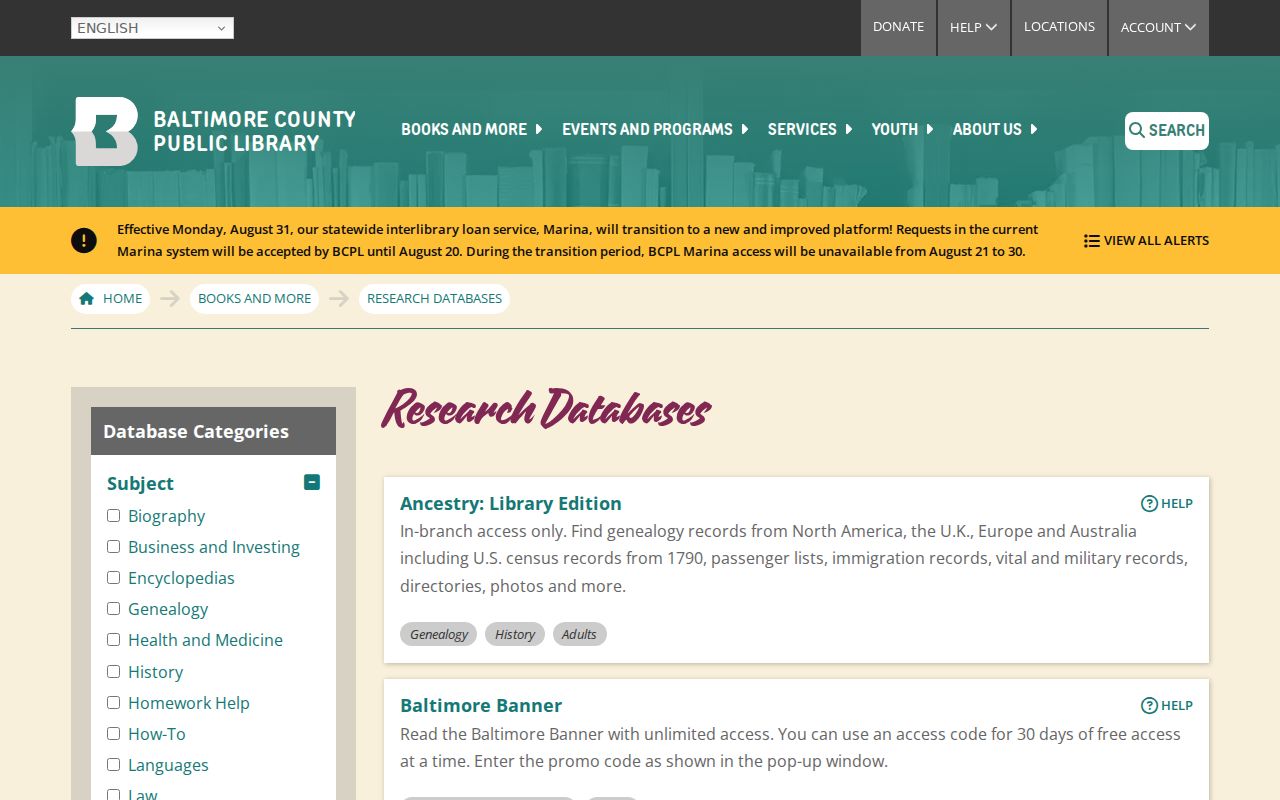
The BCPL research databases include Ancestry Library Edition in branch, plus newspaper and history tools. Staff can point a resident lookup toward the right database. They can also help preserve citation details. That way a result is easy to return to later. Remember that database results may be indexed by county, post office, or household rather than the later CDP name. A Woodlawn street may hide under a different heading.
Search a person using Woodlawn, Baltimore County, Security Boulevard, Liberty Road, Gwynn Oak, Windsor Mill, Rockdale, Milford Mill, and the exact street. Match each term to the source where it fits. That simple habit widens a past residents search considerably.
Old Woodlawn Addresses Need Context
Woodlawn has no public table of address assignments, postal-name changes, or street renumbering. That gap shapes how a past residents search should proceed. Work through current USPS formatting first. Then try GIS, SDAT, plats, deed legal descriptions, historic maps, directories, census records, and news records in that order. The 1851 Baltimore City and County split matters too. An older record may sit in a city repository. A later source may say Baltimore County anyway. The 1835 courthouse fire adds another reason for caution around missing older material.
When a modern address vanishes from older tools, stop hunting the new street number. Start instead with the parcel's lot, block, subdivision, tract, map, grid, or prior deed reference. A recorded plat can preserve road and lot labels. Those labels may no longer match postal wording. Map context can come from the Library of Congress 1877 Baltimore County atlas. The Sanborn map route can help as well. Maryland State Archives finding aids identify land, probate, marriage, and tax series. A modern address search cannot reach those series. Log which place term, source, and date were tested before calling a link unresolved.
Note: A repeatable no-result note records jurisdiction, spelling, date, name form, and search fields. It also records index or image status without claiming the record never existed.
Woodlawn Previous Resident Limits
A deed chain cannot name every past resident at a home. It cannot establish modern contact details, utility accounts, vehicles, school records, or where a person lives now. Split it further: no contact details, no utility accounts. No vehicles, school records, or current address. Put these records to work for family history. They also suit estate questions, a documented property history, or civic research. Keep living-person details to the minimum the question requires.
Maryland's public-record channels carry confidentiality rules. Current vital records have eligibility limits, and protected voter addresses can be withheld. When an online route comes up short, turn to the clerk. The Archives, the library, or a focused Maryland Public Information Act request work too. Filling the gap with an assumption is the one move to avoid.
Lawful use. Woodlawn address-history research is for lawful historical and personal purposes. Do not use an address history to stalk, harass, or harm anyone.